Blog
Soil Mill with CE Certification: Greater Safety in Sample Preparation

Soil Mill,Soil Mill with CE Certification,Greater Safety in Sample Preparation
Discover the new model in the Tecnal mill line, developed for efficient soil grinding in compliance with international safety standards
The quality of chemical and physical soil analyses begins long before
the analytical stage. It is directly linked to proper sample collection and
preparation and, within this process, grinding is one of the most important
steps.
Mills are used to reduce particle size, promoting sample disintegration.
This process increases the contact surface area and improves the efficiency of
subsequent steps, while also ensuring:
• Sample homogenization, eliminating clods and irregularities
• Particle size standardization, essential for result reproducibility
• Greater analytical efficiency, facilitating interaction with reagents in
extraction, decomposition, and dissolution processes
Without proper grinding, sample representativeness is compromised and
the results of subsequent analyses may not be reliable.
Soil sample preparation
The soil analysis process involves fundamental steps to ensure quality
and representativeness: sampling, drying, grinding, and chemical and physical
analyses.
After field collection, the sample is taken to the laboratory, properly
identified, and subjected to drying. This step may be performed in open air or
in forced-air circulation ovens at approximately 40°C. At the end of the
process, TFSA (Air-Dried Fine Earth) is obtained, the standard condition for
most laboratory soil analyses.
In laboratories with high sample demand, larger-capacity ovens are essential to optimize workflow. The Tecnal TE-394/5, for example, has a capacity of 1,516 liters, a horizontal ventilation system, and an internal cart with 11 trays, facilitating sample handling and transportation within the laboratory.

In the next stage of the process comes grinding, responsible for
preparing the sample for analysis.
Soil grinding: more than simply reducing particle size
Soil grinding goes beyond simple material fragmentation. Its main
objectives include:
• Sample homogenization;
• Breaking up clods;
• Removal of undesirable residues such as roots and small stones;
• Adjusting particle size according to methodological requirements;
• Increasing the contact surface area to enhance chemical reactions;
• Improving efficiency in extraction, decomposition, and dissolution processes
of components.
At the end of grinding, the sample should present standardized particle
size, generally 2 mm, according to the requirements of chemical and physical
analyses.
TE-330/2: efficient grinding with certified safety
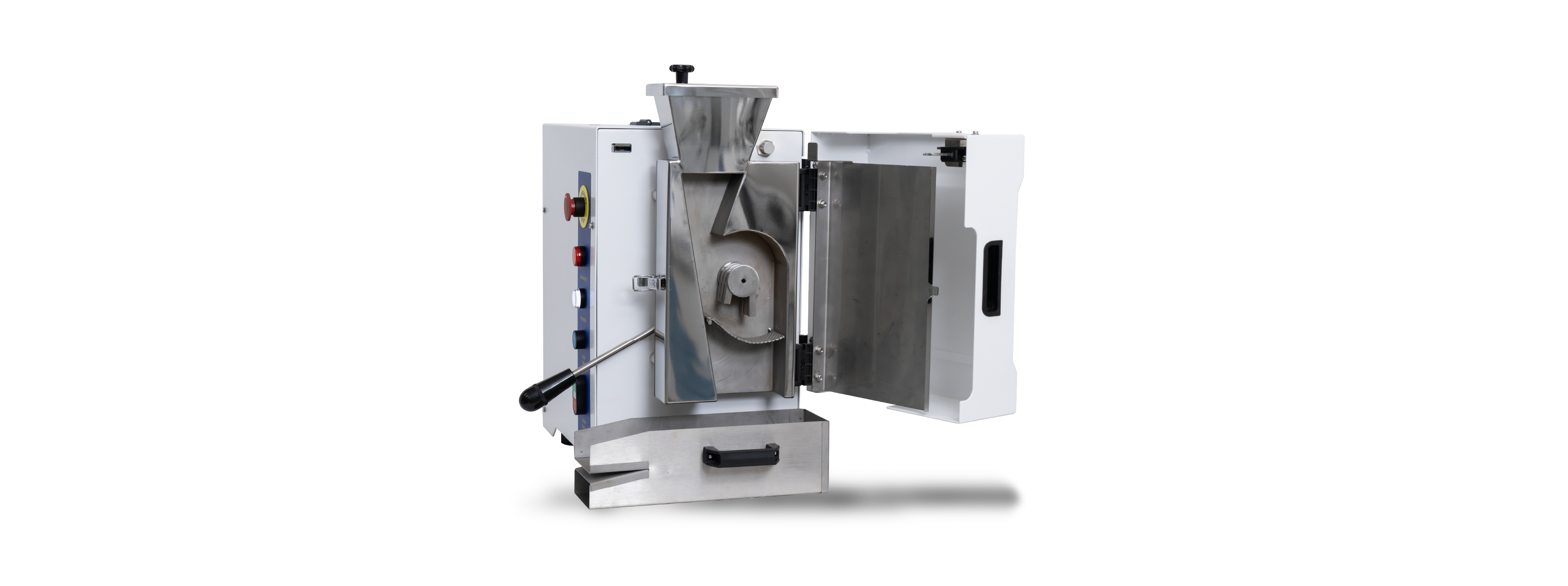
Considering current laboratory demands, especially regarding safety and international compliance, Tecnal introduces the new TE-330/2 Soil Mill.

.
Equipment features
• Continuous process with feeding through the upper hopper and direct
discharge into the collector;
• Collector with 2.0 mm screen for particle size suitable for analyses;
• Processes soils from different textural classes;
• Quieter operation;
• Front opening system and chamber without sharp edges, facilitating cleaning;
• Stainless steel components and dust protection filters for the motor and
electrical panel;
• Easy maintenance and cleaning.
.
Construction and materials
• 304 stainless steel rotor;
• 316L stainless steel movable hammers;
• Grinding chamber and collector made of stainless steel;
• Cabinet with electrostatic painting and anti-corrosion treatment;
• Fixed rotation of 1,750 RPM, ensuring sample standardization and analytical
reproducibility.
CE Marking: compliance with international safety standards
The main differentiator of the TE-330/2 is the CE marking (Conformité
Européenne), which certifies the equipment’s compliance with rigorous European
machine safety standards. In practice, this translates into greater operator
protection and increased laboratory reliability:
• Locking system preventing operation with doors open;
• Emergency stop button;
• Double protection against access to moving parts;
• Safety bar on the feeding hopper;
• Operation and emergency indicator lights;
• Safe buttons for door opening and equipment activation.

.
Tecnal Soil Mill Line
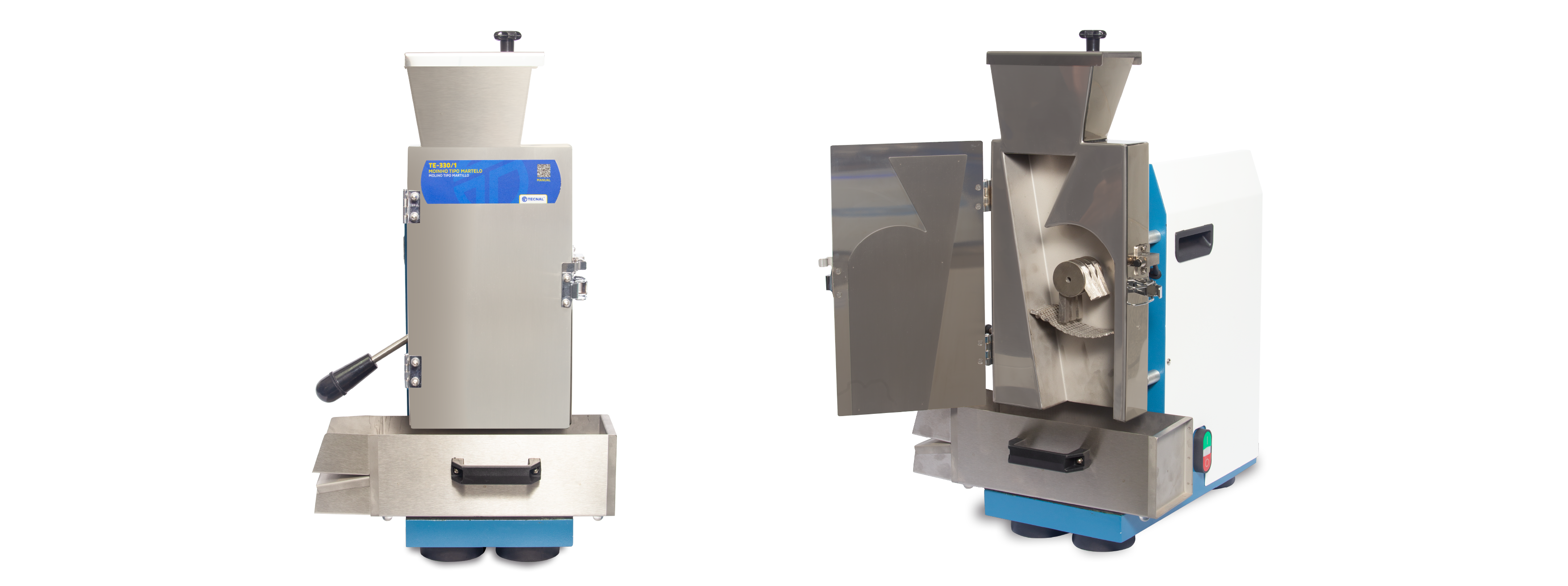
The TE-330/2 complements the TE-330/1 model, the already
well-established Tecnal Soil Mill TE-330/1, a hammer-type mill widely
used in soil laboratories.
Both models deliver the sample at the appropriate particle size after
grinding, featuring a collector with a 2 mm mesh sieve made of AISI 304
stainless steel, making them reliable solutions for routine sample preparation.
The TE-330/2 expands the mill line by incorporating CE certification and
additional operational safety features.
.
Complete Solutions for Soil Analysis
In addition to mills, Tecnal offers a complete product line covering all stages of the process, from sample preparation to chemical and physical analyses, with equipment present in hundreds of laboratories in Brazil and abroad.
And to learn more about the TE-330/2 Soil Mill or to request technical information, please contact the Tecnal team.
